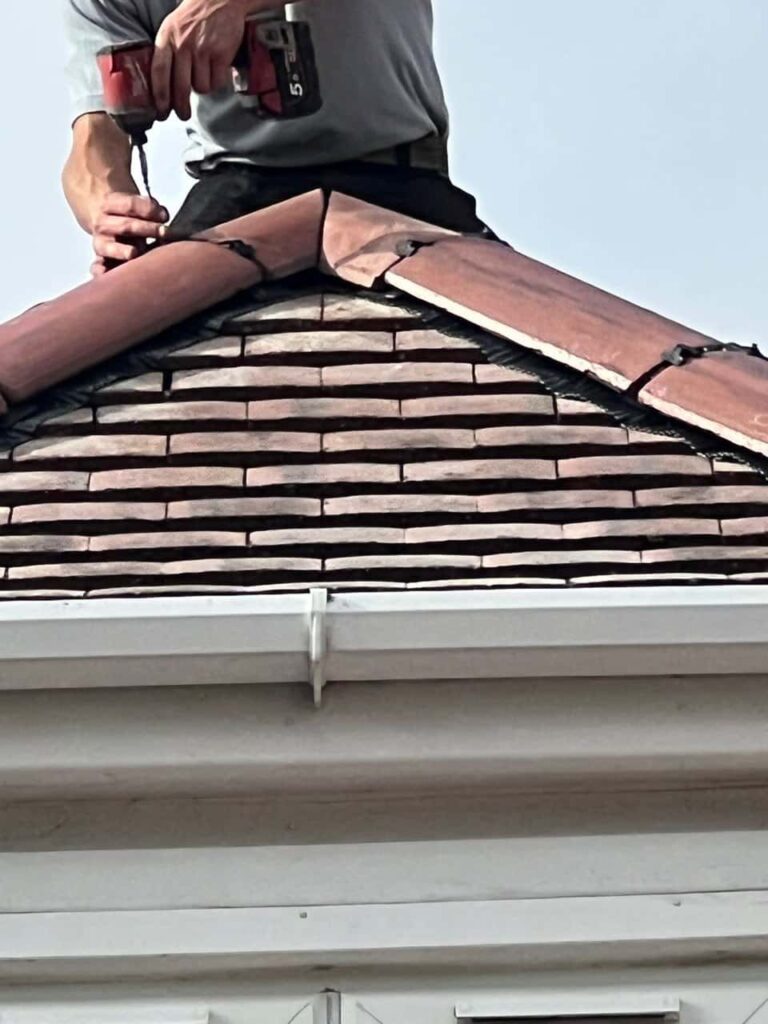
Roof tiles are designed to provide a protective covering that keeps rainwater and other weather elements away from the structure of a property. However, their ability to remain secure depends on more than the condition of the tiles themselves. Roof fixings, including nails, screws, clips and other fastening components, play an important role in keeping tiles correctly positioned.
When these fixings become damaged, corroded or loose, individual tiles may begin to shift, lift or become dislodged. For homeowners in New Milton, Hampshire, understanding how fixing problems develop can help identify roofing issues before they lead to leaks or more extensive damage.
What Are Roof Fixings and Why Are They Important?
Roof fixings are the components used to secure tiles or slates to the supporting roof structure. Depending on the roofing system, these may include nails, screws, clips or specialised mechanical fasteners.
Their purpose is to keep each tile in its intended position, helping the roof covering remain stable during everyday exposure to wind, rain and temperature changes.
Not every roof tile is fixed in exactly the same way. Some traditional roofs rely partly on the weight and overlapping arrangement of the tiles, while exposed areas and particular tile types may require mechanical fixings. The correct fixing method depends on the roof design, materials and installation requirements.
When these components fail, tiles can lose their support and become more vulnerable to movement.
Common Reasons Roof Fixings Become Damaged
Several factors can affect the condition and reliability of roof fixings over time.
Corrosion and General Deterioration
Metal fixings can gradually corrode when exposed to moisture over many years. As corrosion progresses, nails or screws may lose strength and their ability to hold tiles securely.
This can cause tiles to move slightly before becoming noticeably loose. The problem may be more widespread if the original fixings were unsuitable for the roofing environment.
Strong Winds and Repeated Movement
Wind places pressure on roof coverings, particularly around exposed roof edges, ridges and verges. Repeated movement can place strain on fixings and gradually loosen components that were previously secure.
If a fixing has already deteriorated, strong winds may cause the affected tile to lift or shift out of position. Once one tile becomes loose, neighbouring sections may also become more vulnerable to movement.
Incorrect Installation
Roof fixings need to be appropriate for the tile type and supporting structure. Incorrectly positioned nails, unsuitable screws or poorly fitted clips can reduce the stability of the finished roof.
Fixings that are driven too deeply or not secured properly may also contribute to problems over time. Correct installation is essential to ensure tiles remain properly supported.
Ageing Roof Components
As a roof gets older, its individual components naturally experience wear. Fixings may deteriorate, supporting battens can weaken and the surrounding materials may become less reliable.
A tile that appears to be in good condition may still become loose if the component securing it has failed. This is why an inspection should consider the entire fixing arrangement rather than focusing only on visible tile damage.
Warning Signs That Roof Tiles May Have Loose Fixings
Fixing problems are not always easy to identify from ground level, but certain signs may indicate that a roof needs attention.
Look out for:
- Tiles that appear uneven or out of alignment.
- Visible gaps between neighbouring tiles.
- Tiles that lift or move during windy weather.
- Missing tiles following strong winds.
- Pieces of broken roofing material around the property.
- Damp patches or water stains inside the loft or on ceilings.
These symptoms can also be caused by broken tiles, damaged battens or other roofing defects. A professional inspection is needed to establish the exact cause.
How Loose Roof Tiles Can Lead to Further Damage
A loose tile may initially seem like a minor issue, but leaving it unattended can create several problems.
When a tile moves away from its intended position, gaps can develop in the roof covering. Wind-driven rain may then reach the underlay or supporting structure, increasing the risk of moisture entering the roof space.
Continued movement can also damage adjacent tiles and place additional strain on nearby fixings. If a tile becomes completely dislodged, it may leave part of the roof exposed and create a falling-object hazard.
Addressing the underlying fixing problem early helps reduce the likelihood of these issues developing further.
How Professional Roof Repairs Address Damaged Fixings
Repairing loose tiles involves more than simply pushing them back into position. The cause of the movement needs to be identified so that the repair provides reliable support.
A professional roofer can inspect the affected area, check the condition of the fixings and assess whether the surrounding tiles, battens or underlay have also been damaged.
Depending on the findings, repairs may involve:
- Replacing corroded or damaged fixings.
- Re-securing loose tiles using suitable fastening methods.
- Replacing cracked or broken tiles.
- Repairing weakened supporting battens where necessary.
- Checking neighbouring tiles for signs of movement.
Using appropriate materials and installation techniques helps restore the stability of the roof covering and reduce the risk of recurring problems.
Why Regular Roof Inspections Matter
Periodic roof inspections can help identify deteriorating fixings before tiles become noticeably loose or fall away. This is particularly useful for older roofs or properties that have experienced repeated exposure to strong winds and heavy rainfall.
An inspection should include the condition of the tiles, visible fixings, roof edges and supporting components. Identifying small defects early can make it easier to arrange suitable repairs and maintain the roof’s overall condition.
Homeowners should avoid climbing onto the roof themselves, as loose tiles and weakened sections can be unsafe to access.
Conclusion
Damaged roof fixings can gradually reduce the stability of roof tiles, allowing them to shift, lift or become dislodged. Corrosion, strong winds, incorrect installation and ageing components are all potential causes. If left unresolved, loose tiles may expose the roof to water ingress and further deterioration.
For homeowners in New Milton, Hampshire, MCM Roofing Repairs New Milton can help identify fixing problems and recommend suitable roofing repairs. If you have noticed loose, uneven or missing tiles, get in touch to discuss your concerns and arrange a professional roof inspection.
Call us on: 01425 208 596
Click here to find out more about MCM Roofing Repairs New Milton
Click here to complete our contact form and see how we can help with your roofing needs.