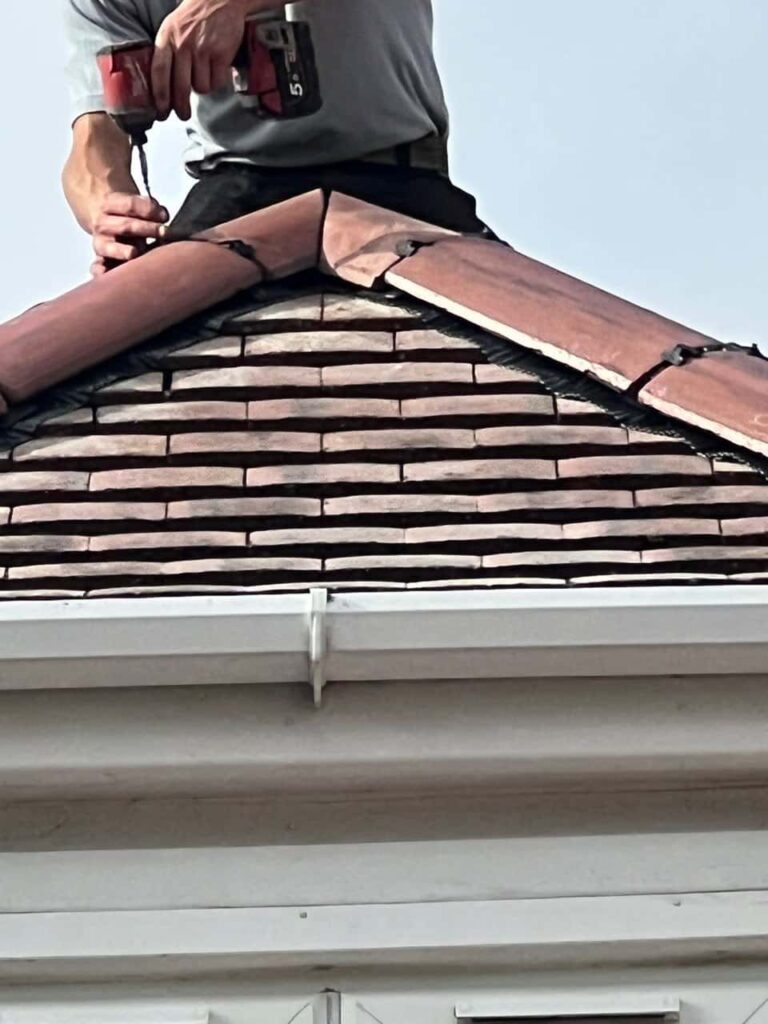
Concrete roof tiles are designed to provide a durable outer covering capable of protecting a property through years of changing weather conditions. However, like any roofing material, they can eventually become cracked, chipped, displaced or otherwise damaged. Sometimes the problem affects only one or two tiles, while in other cases repeated tile damage can indicate that a wider section of the roof needs attention.
Understanding why concrete roof tiles become damaged is important because simply replacing a visibly cracked tile does not always address the underlying cause. Weather exposure, movement, weakened fixings, previous damage and deterioration elsewhere in the roof can all contribute to problems with the covering.
For homeowners in New Milton, Hampshire, recognising the difference between isolated tile damage and a developing pattern of deterioration can help ensure that repairs are appropriately targeted before water has an opportunity to affect other roofing components.
Why Do Concrete Roof Tiles Become Cracked, Broken or Displaced?
Concrete roof tiles are exposed to demanding conditions throughout their service life. Although they are robust, deterioration or external forces can eventually affect individual tiles.
Common causes of concrete roof tile damage include:
- Long-term weather exposure
- Repeated wet and cold conditions
- Strong winds affecting loose or weakened tiles
- Movement within the roof covering
- Deteriorated or ineffective fixings
- Impact damage
- Previous poorly executed repairs
- Movement in surrounding tiles
- Damage during inappropriate access to the roof
- General ageing of the roof covering
The cause matters because different types of damage require different approaches to repair.
Long-Term Weather Exposure Gradually Affects Roof Tiles
Roof tiles spend their entire working life exposed to the elements.
Rainfall, sunlight, wind and changing temperatures repeatedly affect the outer covering. Concrete tiles are manufactured to cope with these conditions, but their surface and overall condition can still change gradually over a long period.
Weathering does not necessarily mean that a tile has failed.
However, as a roof ages, previously minor weaknesses can become more apparent. Individual tiles may become more vulnerable to cracking or breaking, particularly where other factors such as movement or previous damage are also present.
This is why the wider condition of an older roof should be considered when several tiles begin deteriorating.
Temperature Changes Can Place Stress on Existing Weaknesses
Roofing materials experience continual changes in temperature.
Concrete tiles can respond to these changing conditions, and existing weaknesses may become more noticeable over time.
A tile that is already damaged or compromised may be more susceptible to further deterioration than one in sound condition.
This does not mean normal temperature changes automatically cause concrete tiles to fail. Instead, they can contribute to the progression of defects that are already present.
When cracking repeatedly develops in a particular area, it is therefore useful to investigate whether another underlying factor is contributing.
Water Can Make Existing Damage More Significant
A cracked tile may continue appearing relatively intact while still providing a route through which moisture can reach beneath the normal outer surface.
Repeated wetting can make existing weaknesses more important.
Roof tiles are arranged in overlapping courses so rainfall travels down the outside of the roof. Significant cracks or broken sections can interrupt this arrangement.
The materials beneath the tiles may then receive greater exposure than intended.
Repairing damaged tiles restores the outer covering and reduces reliance on concealed roofing components to manage water entering through defects above them.
Strong Winds Can Affect Weakened Tiles
Wind can place considerable pressure on exposed roof coverings.
Tiles that remain correctly positioned and adequately secured are designed to function as part of the complete roof. However, an already loose, damaged or poorly supported tile may be more vulnerable during demanding weather.
Movement can cause a tile to shift from its intended position or expose surrounding sections to additional stress.
A tile does not necessarily need to blow completely from the roof before there is a problem.
Even partial displacement can alter the intended overlap and potentially create an easier route for rainwater beneath the covering.
Cracking and Slipping Can Be Connected
A cracked tile and a slipped tile may initially appear to be separate problems, but they can sometimes be related.
Movement can place additional stress on roofing materials, while a damaged tile may no longer remain as securely positioned as it previously did.
When a concrete tile is both cracked and displaced, replacing it without considering why movement occurred can leave part of the problem unresolved.
The surrounding tiles and accessible supporting components should therefore be included in the assessment.
This root-cause approach helps determine whether the problem is genuinely isolated.
Fixings Can Influence Tile Stability
Concrete tiles rely on more than their own weight to remain part of a stable roof covering.
The fixing arrangement and supporting components help keep tiles correctly positioned.
As a roof ages, problems can sometimes develop within these less visible elements. A tile may appear reasonably sound but begin moving because its support is no longer performing as intended.
Where multiple tiles repeatedly slip or become displaced, simply replacing individual units may therefore be insufficient.
Professional inspection can help establish whether the visible tile damage is the primary problem or a symptom of deterioration elsewhere.
Impact Can Crack an Otherwise Sound Tile
Concrete is strong but not completely resistant to impact.
A sufficiently concentrated force can crack or chip an individual tile even when the remainder of the roof is in satisfactory condition.
In these situations, damage may remain highly localised.
If the surrounding tiles, fixings and roof covering are sound, replacing the affected tile may provide an appropriate repair.
The important point is not to assume that every cracked tile indicates widespread roof failure. The pattern and cause of the damage need to be considered.
Inappropriate Foot Traffic Can Damage Concrete Tiles
Roof tiles are designed as a weather covering, not as a general walking surface.
Incorrect access across a tiled roof can place concentrated loads on individual tiles. This can result in cracking or breakage, particularly if the tile is already aged or weakened.
Damage may not always become immediately obvious.
A fine crack can develop and only become noticeable later when weather exposure causes the defect to worsen or water begins finding its way through.
Roof access should therefore be handled appropriately rather than treating concrete tiles as surfaces intended to carry unrestricted foot traffic.
Previous Roof Work Can Leave Localised Damage
When work has previously been carried out around a roof, nearby tiles may occasionally have been disturbed.
This does not automatically mean previous work was responsible for later deterioration, but repair history can provide useful context when diagnosing a recurring problem.
If cracking repeatedly occurs around the same feature or previously repaired area, the surrounding construction deserves closer examination.
There may be a localised weakness that has never been completely addressed.
Understanding the history of the affected section can help avoid repeating repairs without investigating why the problem continues returning.
Poorly Fitted Replacement Tiles Can Create Further Problems
A replacement tile needs to integrate correctly with the existing roof covering.
If it does not sit appropriately with neighbouring tiles, the intended overlap and alignment can be affected.
This can create an uneven section that is more vulnerable to movement or water ingress.
A quality repair therefore involves more than placing a new tile into the approximate location of the damaged one.
The replacement should work correctly with surrounding materials and restore the intended arrangement of the roof covering.
Nearby Tiles May Already Be Weakened
When one cracked tile is discovered, it can be worthwhile checking those immediately surrounding it.
Neighbouring tiles may have experienced similar conditions.
They might contain less obvious cracking, movement or deterioration that cannot easily be identified from ground level.
This does not mean that entire areas should be replaced unnecessarily.
Instead, inspecting the surrounding section establishes the true extent of the problem so that any repair is based on the condition found rather than the single most visible defect.
Repeated Damage Can Indicate a Wider Roofing Issue
One broken concrete tile may simply be an isolated defect.
Repeated tile failures across different parts of the roof tell a different story.
When cracking, slipping or breakage becomes increasingly common, the condition of the wider roof covering and supporting components should be assessed.
The issue may involve general ageing, deterioration of fixings or another problem affecting the stability of multiple tiles.
At this stage, continuing to replace one tile at a time without examining the wider pattern may provide only temporary improvements.
Cracked Tiles Can Potentially Lead to Water Ingress
The main purpose of the roof covering is to direct water away from the property.
A substantial crack can compromise this function.
Whether water actually enters depends on the position of the damaged tile, the extent of the crack, the overlap with surrounding materials and the weather conditions.
Some cracked tiles may not produce an immediate internal leak.
However, leaving significant damage in place allows the underlying roof to experience greater exposure than intended.
This is why visible tile defects are worth investigating before internal dampness develops.
Water Does Not Always Appear Directly Below the Damaged Tile
Roof leaks can be difficult to trace because moisture may travel after entering beneath the covering.
Water can follow internal roofing materials before eventually becoming visible inside the property.
As a result, a damp ceiling mark may appear some distance from the damaged tile responsible for the initial entry point.
This is why leak diagnosis should consider both external defects and the route water may have followed internally.
Simply repairing the section directly above an internal stain can miss the actual source.
Damaged Tiles Can Expose Other Roofing Components
Concrete tiles form the visible outer covering, but they are only one part of the complete roof.
Beneath them are supporting components that are not intended to compensate indefinitely for damaged or missing tiles.
When a cracked or broken tile repeatedly allows moisture beneath the covering, these materials can experience greater exposure.
The longer the defect remains, the greater the opportunity for deterioration to extend beyond the original tile.
Prompt localised repair can therefore help protect otherwise serviceable surrounding construction.
Surface Weathering Is Not Always Structural Damage
Concrete roof tiles naturally change in appearance over time.
Their surfaces may become weathered, and biological growth or general exposure can alter how the roof looks.
A weathered appearance alone does not necessarily mean that the tiles have structurally failed.
The more important questions concern cracking, breakage, movement and the ability of the covering to continue directing water effectively.
Professional assessment can distinguish cosmetic ageing from defects that genuinely require roofing repairs.
This helps avoid unnecessary work based purely on appearance.
Moss Should Not Automatically Be Blamed for Every Cracked Tile
Moss can develop on established roofs, particularly where conditions allow moisture to remain on surfaces for longer.
Its presence may make a roof appear older, but it should not automatically be assumed to be the direct cause of every cracked tile.
Where tiles are damaged, the condition of the material and surrounding roof should be assessed independently.
Heavy accumulation can sometimes make visual inspection more difficult, but diagnosing the actual cause remains important.
Roofing decisions should be based on physical defects rather than assuming that everything visible on an older roof is responsible for its deterioration.
One Cracked Tile Does Not Mean You Need a New Roof
Localised damage should be kept in perspective.
A single cracked concrete tile on an otherwise serviceable roof can often be addressed through targeted repair.
The age of the roof alone does not change this.
More extensive roofing work becomes relevant when deterioration is widespread, multiple components are affected or repeated repairs are no longer restoring dependable performance.
The scale of the repair should match the scale of the problem.
A professional assessment can establish this without assuming either the smallest or largest possible solution in advance.
Multiple Damaged Tiles Require a Wider Assessment
When several concrete tiles are cracked or broken, the distribution of damage provides useful information.
A cluster of affected tiles may point towards a localised cause. Damage scattered across several areas can suggest more general deterioration.
The condition of neighbouring tiles should also be considered.
If they remain sound, repair work may still be relatively contained. If cracking and movement are widespread, a broader approach may become appropriate.
The pattern is often more informative than the appearance of one individual tile.
Early Attention Can Prevent a Local Defect From Spreading
A cracked tile does not necessarily represent an urgent major roofing failure, but genuine damage should not be ignored indefinitely.
A tile that continues deteriorating may eventually break further or move out of position.
Once the covering becomes more open, surrounding components can receive additional weather exposure.
Addressing localised damage while the rest of the roof remains sound can help preserve the surrounding construction.
This is one of the main advantages of timely roof maintenance: smaller defects can be managed before they have an opportunity to contribute to wider problems.
Professional Inspection Helps Identify the Cause
Homeowners may be able to spot a visibly cracked tile from ground level, but identifying why it became damaged can require a closer assessment.
The tile itself, neighbouring covering, fixings and surrounding roof condition may all provide useful information.
A professional roofer can determine whether straightforward tile replacement is appropriate or whether another defect also needs attention.
This helps prevent recurring repairs.
The objective should be to restore the affected section while addressing any underlying issue responsible for the damage.
Concrete Roof Tile Repairs in New Milton, Hampshire
For homeowners in New Milton, Hampshire, damaged concrete roof tiles should be assessed according to both their individual condition and the state of the surrounding roof.
At MCM Roofing Repairs New Milton, we can inspect cracked, broken or displaced tiles and determine whether the damage is isolated or connected with a wider roofing problem.
Where individual tile replacement is sufficient, repairs can remain focused on the affected area. If inspection identifies deterioration involving surrounding tiles, fixings or other roofing components, the work can be planned around the actual cause rather than repeatedly treating the visible symptom.
Conclusion
Concrete roof tiles can crack or become damaged through long-term weather exposure, impact, movement, weakened support, inappropriate foot traffic and general deterioration within an ageing roof covering. In some situations, one tile is affected; in others, repeated cracking or slipping can reveal a wider issue.
A few damaged tiles do not automatically mean that a roof needs extensive work. Where the surrounding covering remains sound, targeted tile repairs may be entirely appropriate. The important step is identifying why the damage occurred and checking whether nearby roofing components have also been affected.
If you have noticed cracked, broken or displaced concrete roof tiles at your property in New Milton, Hampshire, contact MCM Roofing Repairs New Milton. We can assess the affected section and recommend an appropriate repair based on the condition of the tiles and the wider roof.
Call us on: 01425 208 596
Click here to find out more about MCM Roofing Repairs New Milton
Click here to complete our contact form and see how we can help with your roofing needs.